My memoir, Hope and Other Luxuries, tells about my attempts to cope with my daughter Elena’s anorexia nervosa. But it also tells the story of my creative life from the beginning of my writing career. I’ve decided to share those sections of my memoir that deal with creativity, writing, and publishing here on my blog.
This excerpt begins on page 434. It highlights the danger of taking on my daughter’s story. Sometimes, ignorance truly is bliss.
Two weeks later, Elena was the one with the cold. Even though she had gained weight again during this stay at Clove House, each day seemed to suck away a little more of her strength. The only thing that brought her to life anymore was the memoir we were writing together.
But if the memoir had become Elena’s lifeline, it had become my little slice of hell.
I had to understand things, and that meant I had to ask about things. That meant I was learning things that I would never have wanted to know—such as the truth about what had been going on during the Summer from Hell.
It began simply enough—but then, I was starting to learn already that I never knew how easy or how painful an interview with Elena would be. Elena was lying on her bed, with an arm up to block the light from the windows. I was sitting beside her with my laptop, taking notes.
“So, I mentioned in an email to a librarian that I’m writing your anorexia memoir,” I told her, “and the librarian says she’s afraid it’ll reveal tricks. She says we don’t need any more anorexics out there teaching today’s teens new tricks.”
Elena smiled—a grim, sad smile. “She doesn’t have any idea what anorexia is.”
“What do you mean?” I asked.
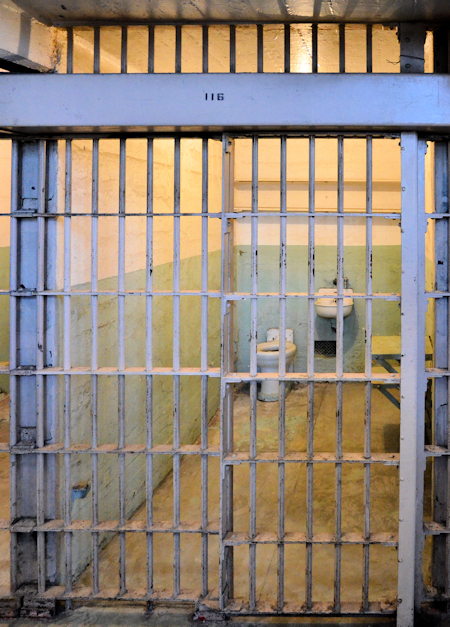
“It’s a prison. It’s twenty-four-hour-a-day life in a jail cell. We never get out, not even for one second. All we can do, all day long, is look for ways to survive. Nobody needs to teach us tricks. We brainstorm our own tricks all day long. When real anorexics compare notes, we’ve already figured out all the same tricks—and each one of us did it on our own.”
Okay, prison, I thought. That’s very interesting. I had already known about the walls that kept others away from my character. So those walls kept her in, as well.
And what about the blackouts? Were those walls, too?
“In the Summer from Hell, what about the dissociation blackouts you had? Were they an escape, or were they more prison?”
Elena thought about this while she blew her nose. “Not really either one,” she said.
“I’ve read that a lot of eating disorder patients start dissociating in childhood,” I continued. “Child abuse is one of the biggest factors. But you never had any blackouts before the Summer from Hell, when you were already seventeen.”
And in my mind, I was adding . . . Right?
“A lot of anorexics dissociate,” Elena said with her eyes closed. “It happened all the time at Drew Center. It can happen to anybody if you’re freaked out enough. I was freaking out.”
“I guess so,” I said a little doubtfully. Anybody? And I tried without success to imagine myself freaking out that much.
“We had a guy brought to the ER once,” she continued. “He was dissociating just like I did, the thrashing around, the works. He was kind of a big guy, and he hadn’t been able to pass his fitness test. That morning was his last try—if he failed, they were going to kick him out of the Air Force. His commander came in with him, and he wanted to know, ‘Is this guy faking it?’ ‘No,’ we told him. ‘It’s real.’ It was the stress.”
“The stress,” I echoed, and then I couldn’t help myself. “That bullying psychiatrist!”
“That psychiatrist probably saved my life.”
Elena’s voice was as calm as if she had mastered inner peace. I felt anything but calm. The writer in me slipped away, and the mother took over again. When I thought about what that man had made her suffer . . .
I set down my laptop and jumped up to walk the floor.
“I can’t believe that,” I said. “He did nothing but make you lose more weight.”
“That’s true, at the start,” she admitted. “It happened when Dr. Petras weighed me. He weighed me himself that second time, when I came in for that second appointment. I had been hardcore deep in my disorder at boarding school, and the stress with Valerie hadn’t helped either. But, early that summer, I was really busy. I had started to concentrate on other things. When I went in for that counseling session with him, and he read my weight out loud, I completely freaked. I had never weighed anywhere near that much in my life!
“So I started restricting again. I really did lose those eight pounds that month. And if he hadn’t stopped me, I would have kept right on going, and I’m pretty sure I would have died. It’s true that at first in the hospital, I lost even more weight, but I was where they were running daily EKGs, so they caught the heart damage early.
“After that, in senior year, even though I kept restricting, I worried about ending up at somewhere like Drew Center again, so I made sure my weight didn’t go too low. He probably saved my life,” she said again.
Dr. Petras, the hero. No! I couldn’t live with that. I could handle the truth, I could look at this world without blinking—but I could not deal with that!
There had been that golden month of June, when the stress had gotten better and Elena had gained weight on her own. As she said, she had concentrated on other things. Maybe she was growing out of it naturally. She was enjoying life. She was even enjoying food. I saw her enjoying food again!
After the Summer from Hell, she never did that again.
Not ever.
“He triggered you himself, reading your weight out loud like that!” I said. “He yelled at you. That man bullied you!”
“I was making a fool out of him,” Elena said. “Nobody believed his anorexia diagnosis. I had told Dr. Petras about my restricting, but to everybody else, I acted like, What? The pediatrician actually told me he thought Dr. Petras was a crackpot. Nobody likes to be made to look like an idiot.”
“Thanks to him, you started dissociating,” I said. “His bullying knocked you right out of reality.”
“It wasn’t just dissociation,” Elena pointed out. “There was the starvation, you have to remember that. A lot of the time, I was so weak, I really did faint.”
I stopped to stare out the window. It was dusk already. We could see the sunrise once it cleared the trees in the neighborhood behind us, but it bothered me that we couldn’t watch the sun go down.
My careful lists of questions that summer! I thought sadly. I had opposed that bullying moron so completely, with all my logic and reason. Was he right? I asked myself. Can I live in a world in which that man was right? And I felt myself give a shiver all over, as if flies had landed on me.
No! I would never believe that.
I could believe that Elena had had an eating disorder then, even a serious one. I could believe that she had needed professional help. But I would never believe that she should have been treated so cruelly. A rape victim, bullied and yelled at—no! That treatment had no place in a trauma victim’s recovery.
That man was still a bully, and he was still a moron. He had still caused more harm than good. That’s what I could live with! Yes, I could live with that.
Shadows gathered over the grassy playground. The birds were singing quietly. I turned my mind to my old lists of questions—to the other mysteries from that summer.
“But what about the weight loss in the children’s hospital?” I challenged. “They were watching every bite, and you had the feeding tube and everything, and you still kept losing weight.”
“Anorexia doesn’t turn around in a day,” Elena said. “Just like me in January, when I got here to Clove House: even on three thousand calories a day, I wasn’t putting on weight. And besides, at the children’s hospital, I only ate about half the food they gave me, and very little of the feeding pump stuff went in.”
I turned in amazement to look at Elena. Was my daughter—my character—joking?
No, she didn’t look as if she was joking. She had a frown on her face. She had her eyes shut, and she gave a sniffle to clear her nose.
“But what about the anorexia protocol?” I asked.
“The techs who watched me eat? They were just nice girls. They weren’t mental health nurses. They thought I was just like they were.”
But . . . weren’t you? I thought.
I needed to calm down. I was getting too involved again.
“So you did what?—with those nice girls there?” I asked.
“I hid food. I hid it anywhere I could. Plastic wrap. Pajama sleeves. I’d get up to come to the table, but I’d keep my fuzzy blanket wrapped around me. I could stick all kinds of food in there. That’s why the real treatment centers never let their patients have loose clothes or a hoodie.”
My mind boggled. I could feel it boggling. My imagination was pulling up images of Elena squirreling away a slice of tomato here, a piece of cheese there, a chunk of sandwich . . . right in the clothes she was wearing. In the blanket she slept under at night!
A grimace of disgust hardened on my face as I watched the imaginary film clips. I had to swallow my saliva.
That’s nasty! It’s all so unsanitary! I thought. It’s unsavory—that’s what it is. Unsavory!
But that was only the mother doing the thinking.
Look at the caution my character is showing! thought the writer. Look at the attention to detail. There it is again, that careful attention to detail. That’s a constant with this character. And think of the confidence it takes to engage in that misdirection, to distract someone right in front of you. The willingness to play with societal norms and rules like a magician: Nothing up my sleeve but a pickle spear!
Elena was right: this was a real anorexic’s trick. It wasn’t anything someone had needed to teach her. It was an act brought on by sheer desperation. It wouldn’t even occur to a normal person!
My imagination continued to bring me sample bits of film. It showed me Elena, cagey, casual, carrying on a conversation while she stuffed tomato slices and pieces of ham into her clothes.
Ugh!
But—now, wait a minute, this was interesting—it looked very much like a prisoner slipping a spoon or some other implement into his pants.
Is that why Elena watches prison shows all the time? asked the writer. Because she sees herself as one of them? And I made a mental note to find out more about that. It was a whole interview, all by itself.
“Okay, but the feeding pump,” I continued, sufficiently calmed down that I could sit on the bed again and pick up my laptop to take notes. “That room at the children’s hospital was pretty small. I slept within eight feet of you, and a nursing tech sat up by the door all night to make sure you didn’t mess with the pump. So, what do you mean, not much of it went in?”
Elena’s voice was stoic. “What can I say? If you want it enough, you’ll be the last person awake.”
What?! They fell asleep? The techs who were watching over my daughter—they fell asleep?!
I forced myself to take notes, just as if this were something I might forget later. As if it were something I would ever forget.
I needed to stay calm. I needed to stay objective.
“Yeah, but you must have had to wait for quite a while,” I said aloud. “That means the pump had already been going for some time.”
“I suctioned it out.”
I fell silent.
Elena interpreted this as encouragement to continue her explanation.
It wasn’t encouragement.
“I suctioned it out,” she elaborated, “with the syringe the nurse used to clear the line. She left it right next to the pump every night. No way would a mental health nurse make that mistake. I used it to pull a suction and let the feeding tube drain into the sink.”
“You suctioned out the contents of your stomach,” I said flatly.
I could feel my own stomach twisting, rising. I was going to be sick. This was . . . so horrible. So foreign! So utterly alien to health!
But look at the tenacity! said the writer. Look at the willpower. Yes, it’s foreign—now get over it! What’s her reason?
“Why?”
That was the most I could manage. I couldn’t trust myself to say more.
“It’s always been a phobia of mine,” Elena said, “the thought that I’ll be in a coma or something, and while I’m lying there helpless, they’ll pump me full of calories till I’m huge. And I’ll wake up, and I’ll be three hundred pounds and not be able to do anything about it.”
My imagination played out that image: lying there helpless, pumped full, huge.
And my writer mind pounced: The rape!
I remembered the fourteen-year-old Elena, home from the boarding school—that intense, miserable, thin little fourteen-year-old whom Dr. Eichbaum had pronounced completely normal. That “normal” eighth grader was dragging me to the library . . . to check out books on babies.
What to Expect When You’re Expecting.
At the time, Elena had told me she wanted to learn about childcare for babysitting, and I had supported her desire to learn whatever she wanted to learn, to pick up any book the library had to offer. I did ask a few gentle questions of course. They didn’t get anywhere. But then, what had my character said about Dr. Eichbaum’s questions?
I lied my ass off.
That fourteen-year-old was carrying a horrible secret. She was terrified that she might be pregnant.
Helpless. Raped. Terrified. And maybe pregnant.
What does a mind do with a rape? What can it possibly do with such terror and disgust and shame? It buries the secrets, and like termites, those secrets eat their way out somewhere else . . .
Helpless—a coma. Assaulted—a feeding tube. Pregnant—pumped up into obesity . . .
And four years later, there was Elena at the children’s hospital, lying helpless as the sitter and I nodded off. Pumped full of calories, absolutely petrified with terror and disgust and shame . . .
I couldn’t think about this anymore. I couldn’t talk about it anymore. I groped around in my mind for a distraction, something, anything—
“What about the puddings?” I asked.
Elena didn’t move. She still had her hand over her eyes. Every now and then, she cleared the gunk out of her throat.
“What about them?” she muttered.
“Every day at the children’s hospital, I brought you a pudding, and every day, you ate it. You acted like you couldn’t wait. But at the same time, you were so obsessed with calories that you were passing out from the stress of having to eat. You were stuffing potato chips into your pillow case. You were staying up half the night to pump your own stomach.”
And, in the back of my mind, I was waiting for Elena to protest these incredible statements, to sit up and laugh: No, I wasn’t!
But instead, she just coughed and blew her nose again. “And?”
“And you anorexics can’t bear to eat!” I said. “Five pieces of popcorn is enough to send you into a tailspin. It keeps you up all night, it sends you exercising, it brings your Critical Voice in to scream at you . . .”
As I said this, I knew what I wanted. I knew exactly what I wanted. I wanted Elena to say, That’s crazy, Mom! I don’t think that way. You’re being silly. You’ve got it all wrong! And she would take me by the hand, and we would walk back to a normal life . . .
But Elena just said, “Yeah, so?”
I felt anger and confusion and pain rise up to choke me. It was all wrong! So wrong!
“And so, what about the puddings I brought you?” I snapped. “Did you just purge them?”
“No, I never purged the puddings.”
“But why?”
I was really angry now. The puddings had made me angry. Those puddings represented everything I didn’t know back then, despite my best efforts to learn. They represented everything that still made no sense.
“You count every calorie!” I said—but I realized I wasn’t saying it, I was shouting it. “You watch every bite! Those puddings—they must have been torture! Why did you let me feed them to you? Why did you act like you wanted them?”
She said, “I did it because it made you happy.”
I put down my laptop. I hurried off to the bathroom. I sat down in a corner on the tile floor, and I cried.
Those puddings were and are the saddest thing in this entire story. They were love and confusion and hurt and redemption. They were the gift of the magi.
Text copyright 2015 by Clare B. Dunkle; text courtesy of Chronicle Books. Photo of a prison cell, Alcatraz Island, San Francisco, California, by Joseph R. Dunkle, copyright 2017. To read my latest blog posts, please click on the “Green and Pleasant Land” logo at the top of this page.